Nickel-and-Dimed by the Fine Print: Where Your Slot Budget Disappears Before the Reels Move
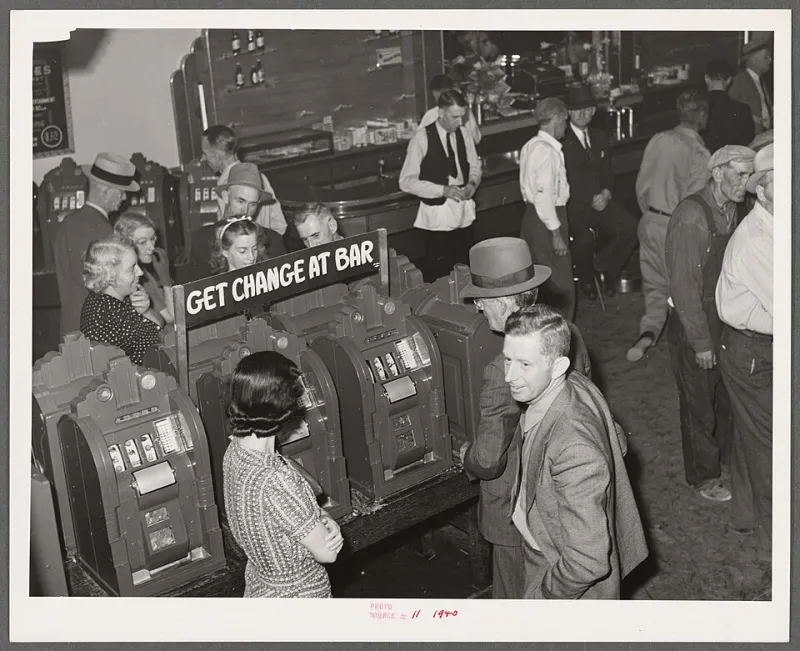
Photo: Arthur Rothstein, Public domain, via Wikimedia Commons
Ever load up a slot session with a nice, tidy budget, only to wonder later where half of it went? You counted your spins. You tracked your wins. And still, the math doesn't add up.
Here's the thing most casual players learn the hard way: the games aren't the only thing eating your money. There's a whole layer of hidden costs — call it the sweet tooth tax — that chips away at your bankroll before the first reel even stops. Let's unwrap them.
The Withdrawal Fee Shuffle
You finally hit a decent win. You go to cash out and — surprise — there's a fee. Or a minimum withdrawal amount that forces you to leave money sitting in your account. Or a processing window that tempts you to reverse the payout and keep playing.
That last one is the sneakiest. Some platforms make it easy to cancel a pending withdrawal with one tap, and suddenly your "safe" winnings are back in the game. If a site dangles a fee for fast payouts but makes standard cashouts slow and complicated, that friction is a cost. It just doesn't show up on a receipt.
Bonus Money That Isn't Really Yours
Free spins and deposit matches feel like finding an extra candy bar at the bottom of the bag. But bonus credits almost always come wrapped in wagering requirements — sometimes 30x, 40x, or more.
Say you claim a $20 bonus with a 40x playthrough. That's $800 in total bets before a dime is withdrawable. If you were planning to play $100 anyway, the bonus is a nice boost. If you weren't, you just committed to spending four times your budget chasing money you can't touch. Read the multiplier before you opt in, not after.
The Currency Conversion Bite
Playing on offshore or international platforms? Some sites bill in euros or another currency, and your bank or card issuer adds a foreign transaction fee on top. Three percent here, a flat $2 there — it's small enough to ignore on any single deposit, but if you top up a couple times a week, that's real money funding nothing but fees.
US players have it easier with state-regulated options in places like New Jersey, Michigan, and Pennsylvania, where deposits are domestic and fee structures are disclosed. Wherever you play, check what your payment method charges before the casino's charge even lands.
Subscription Creep and VIP Traps
Some apps and sweepstakes-style platforms nudge you toward recurring purchases — coin bundles that auto-renew, "VIP club" tiers that reward bigger deposits with bigger perks. The perks are real, but so is the pull to spend more than you planned to unlock them.
A good rule: if a reward only makes sense if you deposit more than your budget, it's not a reward. It's a price tag wearing a party hat.
Time Is Money, Too
Not every hidden cost is financial. Long sessions on high-volatility games can burn through a budget fast, and the longer you play, the more the house edge compounds. A quick coffee-break session of twenty minutes costs you less — in money and in attention — than a two-hour grind where fatigue makes every decision sloppier.
How to Keep the Tax Down
- Audit one deposit. Look at your last top-up end to end: fees, conversion costs, bonus strings. Knowing where the leaks are is half the fix.
- Skip bonuses with playthrough above 25x unless you'd spend that much anyway.
- Withdraw early, withdraw often. Treat cashouts like taking your winnings off the table — because that's exactly what they are.
- Turn off auto-renew on any coin packs or club memberships you barely use.
None of this means the fun is over. It just means the fun gets to be yours — not the fine print's. Budget for the candy, not just the wrapper.