Cotton Candy Never Goes Stale: Why Carnival Treats Run the Candy Slot Aisle
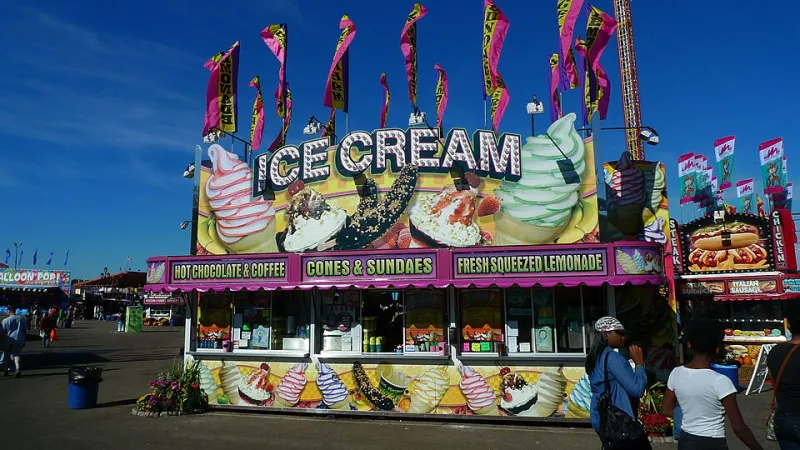
Photo: Inovamidia, CC BY-SA 4.0, via Wikimedia Commons
Walk down any gas station aisle in America and you'll pass a wall of candy bars — Snickers, Twix, M&Ms, the whole gang. Now open up a candy-themed slot and count how many of those wrappers you actually see. Not many. Instead, you're staring down a grinning caramel apple, a puff of pink cotton candy, and a paper boat of funnel cake that somehow pays 500x your bet.
That's not an accident. It's a design decision rooted in something deeper than sugar: memory.
The Fair Beats the Checkout Line
Here's the thing about a candy bar — you buy one every week. It's a dollar fifty at the self-checkout, eaten in the car, forgotten by dinner. There's no story attached.
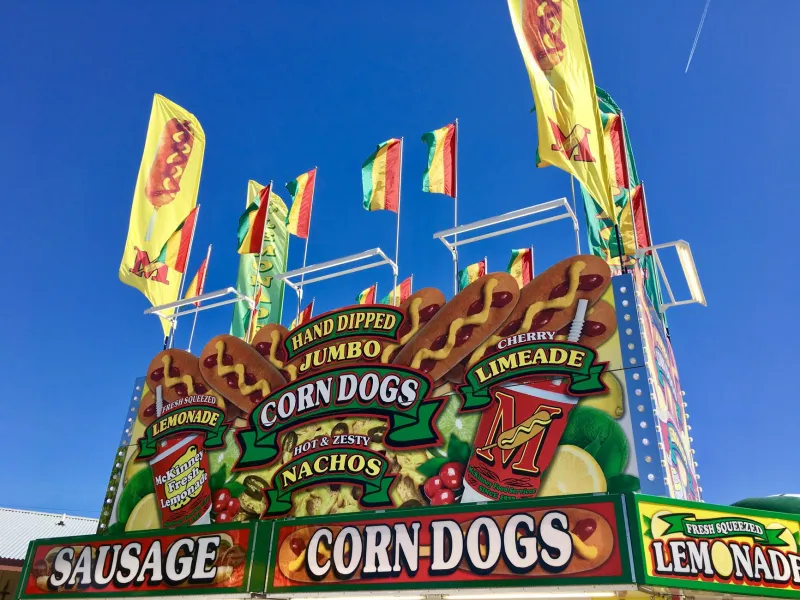
A caramel apple is different. You can only get the good ones in a handful of contexts: the state fair in October, a harvest festival, a boardwalk in summer. Same goes for cotton candy — nobody's spinning sugar at home. And funnel cake? That's pure midways-and-livestock smell territory, fried dough and powdered sugar drifting over the Tilt-A-Whirl.
Game designers figured out years ago that scarcity of experience beats ubiquity of product. When a symbol shows up on the reels, you want it to trigger something, and a Snickers triggers hunger while a funnel cake triggers the summer you were eleven.
Nostalgia Is the Real Bonus Round
American carnival culture is a nostalgia machine by design. State fairs deliberately preserve the same foods, the same games, the same midway lighting they had fifty years ago. It's one of the few places where time travel is a business model.
Candy slots borrow that whole aesthetic wholesale: striped awnings, bulb-lit marquee fonts, prize-booth color palettes. The vibe says "you've been here before," even if you're loading the game for the first time on your phone in a dentist's waiting room.
There's a practical side to this too. Fair foods are visually loud — pink clouds, golden fried dough, glossy red apples — and they read instantly on a five-inch screen. A candy bar in a wrapper is mostly brown rectangle. A cotton candy swirl is pure icon. On mobile, clarity wins.
The Vibe Check on Your Session
So what does all this mean when you're actually spinning? Honestly, it changes the mood of the game more than the math. Carnival-themed candy slots tend to lean playful and loose — calliope-adjacent soundtracks, celebratory confetti, bonus rounds framed like carnival games rather than bank heists. If your goal is a light, coffee-break session, that tone fits like a glove.
It also explains why these games feel seasonal. Fire up a caramel apple slot in October and it lands perfectly; the same game in March might feel slightly off, the way Christmas music does in July. Designers know this and cycle their candy reskins accordingly — fair foods in fall, boardwalk treats in summer.
A Quick Player's Note
None of this changes the odds, of course. Nostalgia is a wrapper, not a payout structure — the RTP is what it is whether the top symbol is a triple-decker funnel cake or a plain old seven. But knowing why a game charms you is its own kind of edge. If you notice the fairground soundtrack pulling you into a third session when you planned for one, that's the nostalgia doing its job.
Enjoy the cotton candy. Just keep an eye on your own allowance — the midway always did know how to separate a person from their ticket tickets.
The next time a grinning candy apple lines up across your screen, take a second to appreciate the craftsmanship. Somebody at a design studio chose that apple over a hundred other sweets, on purpose, because it smells like October in your memory. That's the sweet spot where candy culture and casino culture meet — right around 888 calories a serving.